
Refreshing one room with an artificial plant comes down to three moves and one budget decision. The moves are: put the piece in a container that carries it, shape the foliage within what the maker documents so it does not read as a solid block, and match the size to the wall and furniture it has to sit against. The budget decision is to price the plant separately from the container and the filler, because that is usually what decides whether the refresh looks considered or looks like a nursery pot in a corner. This guide covers those four things for a single room; the room-by-room layouts are in the faux plant ideas for every room.
Key takeaways
- Real versus artificial is a condition, not a verdict. Real plants need consistent light, water and attention; where the room cannot provide that, an artificial piece removes the watering but not every consideration.
- Upkeep does not disappear, it changes. No watering or growing light, but dusting, cleaning and shaping remain, and placement still affects how the finish ages.
- Style the container first. The pot, basket or planter changes how a piece reads more than its price does.
- Shape only what the maker documents. Where the listing describes adjustable stems, follow that; where it does not, place the piece as it comes.
- Measure before choosing. If you want the eye to lift toward the ceiling, compare the piece's actual height with the height of the space; and this article does not provide a fixed lifespan or promise a saving.
In this guide
- Why a room refresh often points to an artificial piece
- The budget decision: plant, container and filler
- Move 1: upgrade the container
- Move 2: shape it within what the maker documents
- Move 3: get the scale and proportion right
- Common questions
Why a room refresh often points to an artificial piece
A room can be well furnished and still feel unfinished, and the missing piece is often vertical greenery. The reason artificial greenery comes up so often in that situation is practical rather than decorative: the spots that need a plant are usually the spots that are hardest to keep one alive in.
Dark hallways, windowless bathrooms and north-facing bedrooms are difficult for many houseplants, and even well-lit rooms bring their own problems — heat and dryness near glazing, draughts from doors, and the inconsistency of a busy week. An artificial piece needs no watering and no growing light, so it can go where the room needs it rather than where a plant could survive.
Three conditions keep that from turning into a promise it cannot keep:
- Placement still matters. An artificial piece is not immune to its surroundings: direct sun through glass, a radiator, and a steamy bathroom all affect how a finish ages. A piece kept out of all-day direct sun will hold its look longer than the same piece sitting in full glare.
- Materials are described by what they are, not by a performance rating. Read the material line for the specific piece you are buying; the pieces in this guide are described by what they are made of rather than by a fade rating, and no fade or outdoor performance rating has been established for them, so keep them indoors unless that listing states otherwise.
- They are decorative objects. If a pet or a child chews, the leaves, stems, small parts and any filler are what matter. The plant-toxicity side of that question — which real species are listed non-toxic and what to do after an exposure — is in the pet-safe indoor plants guide, which is a different topic from this one.
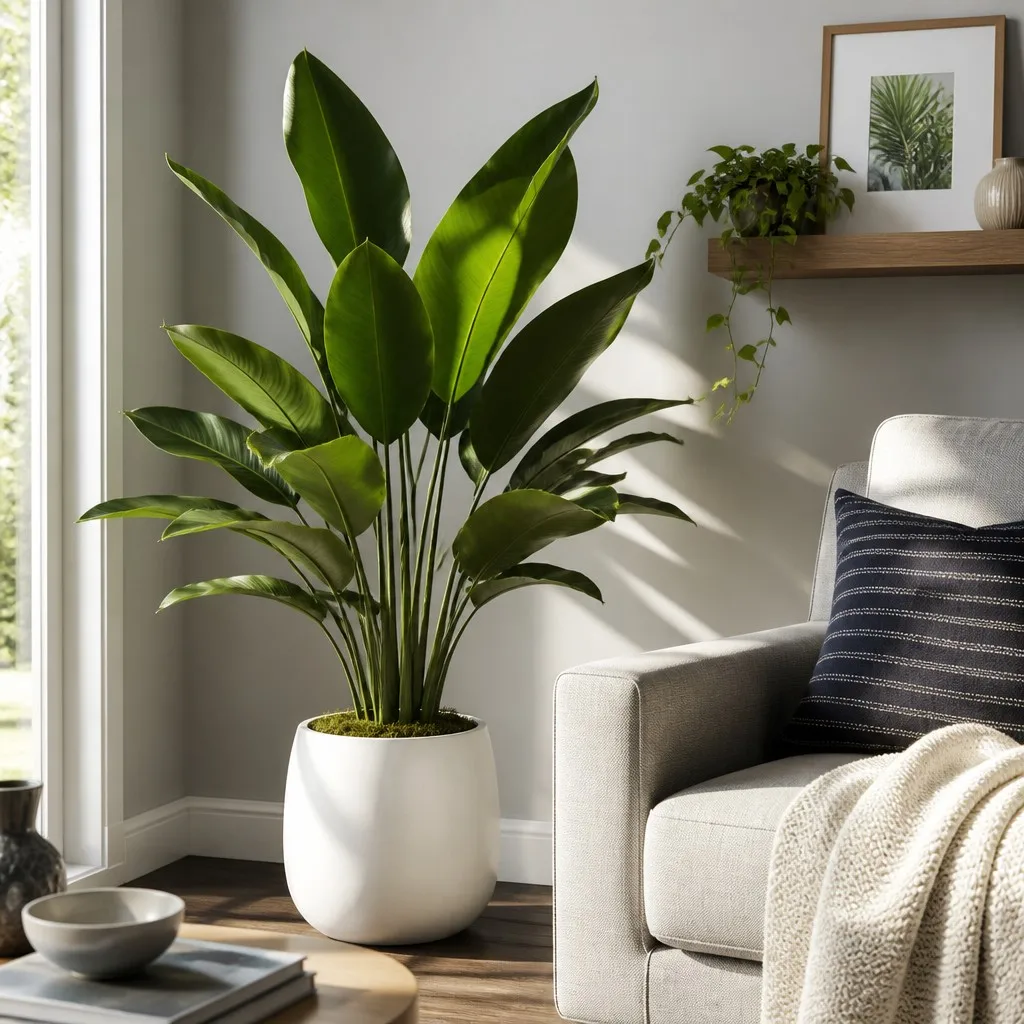
The image below is a styling example for the kind of piece this page is about; it is not a measurement or a material test.
The budget decision: plant, container and filler
Price the two halves separately and the numbers stop being confusing:
- The plant. Sold either potted or as a stem bundle. Check the listing for which one you are buying.
- The container. A ceramic planter, terracotta pot or woven basket. If the piece ships unpotted, this is a required purchase rather than an optional upgrade.
- The finish. Moss, river stones or coconut coir to cover the base where the stems meet the pot.
Comparing the artificial total with a real plant is only useful if you compare the same thing: a potted real plant with soil against a potted artificial piece, over the same period, rather than a bare stem bundle against a fully styled plant. On the real side the ongoing cost is water, feed, pest treatment and replacements. On the artificial side there is no soil, fertiliser or pest treatment to buy again, but dusting and occasional cleaning continue, any repair is on you, and how long the piece keeps its look depends on where it stands and how it is handled — which is why no lifespan figure is published here. This page does not promise that the artificial option is cheaper; it sets out what to compare. A worked version of the split, including how to keep the container budget under control, is in the budget guide.
Move 1: upgrade the container
The fastest change in any room refresh is the container, because the pot is what the eye reads first at floor or console height. A piece that arrives in a lightweight nursery pot looks like stock; the same foliage in a ceramic planter, a terracotta pot or a woven seagrass basket reads as part of the room.
Cover the base where the stems enter the pot with moss, river stones or coconut coir. That hides the mechanics and stops the eye catching the gap between the stems. Choose the container against the piece rather than the other way round: a wide, shallow vessel suits a dense bush, while a stem bundle needs a container deep and heavy enough to hold it upright.
Move 2: shape it within what the maker documents
Real plants are rarely symmetrical. Leaves point in different directions, stems curve, and the shape develops toward whatever light it found. A boxed artificial piece arrives compressed and symmetrical, which is why it can look artificial even when the leaves are good.
Open it out from the base: work the stems outward section by section, bring the outer leaves down and the inner leaves up, and let one or two fronds fall over the edge of the container instead of standing straight up. The limit is set by the piece and by the maker's own shaping note. Where that note says the stems or leaves can be adjusted, shape within what it describes. Where the piece and its instructions say nothing, treat the stems as fixed and use placement rather than bending, and do not force a stem or a leaf you cannot judge.
Move 3: get the scale and proportion right
The most common mistake in a refresh is a piece that is too small for the space. As a proportion suggestion rather than a rule: in front of a tall empty corner, a small tabletop piece leaves a large gap between the foliage and the ceiling, which can make the room read as unresolved. If you want the visual weight to sit higher, compare the piece's actual height with the height of the space and step back to look at the gap, rather than choosing on the plant's nominal size alone.
Measure before you choose:
- Height available from the floor or surface to the point where you want the foliage to stop, and the height you want the finished piece to reach.
- Width available, including the depth of a console or shelf and the clearance for anyone walking past.
- Container opening, if the piece is sold as a stem bundle, so the bundle fits the vessel you already own.
Those three measurements, and the difference between a stem's length and the finished height once it stands in a container, are set out in the artificial plant size guide. Once the scale is right in a living room, the layering and colour decisions are covered in the living-room styling guide; this page stays with the one-room refresh.
Common questions
How do I clean and dust artificial plants?
Dust regularly with a soft feather duster or a dry microfibre cloth. For anything damp, check the care note on the specific listing first and follow it, because materials and finishes differ between pieces; a general damp-cloth routine borrowed from another piece is not a safe default, and strong chemical cleaners are best avoided on any coating.
Will high-end faux plants fade in direct sunlight?
There is no fade rating to point to for these pieces. Keep them indoors, follow verified manufacturer guidance for any outdoor placement, and treat the material line and the finish of the leaf as more informative about quality than a performance label. A piece kept out of all-day direct sun holds its look longer.
How do I make an artificial plant look completely real?
The container, the base covering and the shaping do most of the work; placement finishes it. Put the piece where a real plant would plausibly stand — beside a window, next to a reading chair, in the corner a real plant would have been given — rather than in the middle of a walkway where nothing would grow.
Do I need to buy a pot as well as the plant?
Check the listing. Some pieces ship potted and some ship as a stem bundle that needs a container. Where one is not included, add it to the budget and to the measurement, because it changes both the finished height and the look.
Finishing thoughts
One room, one piece, four decisions: a container that carries it, foliage opened out only as far as the maker documents, a size measured against the wall, and a budget that keeps the plant separate from the container. Work through those and a refresh stops being a question of how expensive the plant was. If you want to see the range before deciding, the store's artificial plant collection is a starting point for browsing rather than a recommendation for one piece.