
Choosing an artificial plant for a bright entryway comes down to separating three things that get bundled together in product listings: what the material line says the piece is made of, how the spot's light and heat actually behave, and whether the piece is intended for indoor use. No fade or sun-exposure rating is published for these pieces, so the useful work is measuring the entry, reading the material line rather than a marketing label, and keeping the piece out of the hardest light. This guide covers what to measure, what the listings can and cannot tell you, and how to place a piece so it holds its look.
Key takeaways
- Read the material line, not the label. Product pages describe what a piece is made of — silk-blend fabric, PE, internal wire. That describes construction, not how the piece will perform in light.
- No fade rating is published for these pieces. Direct sun through glass is hard on any material over time, so a piece kept out of all-day direct sun holds its look longer than the same piece in the full glare.
- Outdoor use is a separate question. These decorative pieces are intended for indoor use; for outdoor placement, follow verified manufacturer guidance.
- Measure first. Console depth, door swing, walkway clearance, height available and the hours of direct sun decide what fits and where it can stand.
- The cost comparison is about upkeep, not a durability forecast. Nothing here predicts how many years a piece will last.
In this guide
- What a bright entryway does to a plant
- Cost and upkeep: what the comparison can and cannot tell you
- What to check before you buy
- Measuring and placing a piece in a bright entry
- Common questions
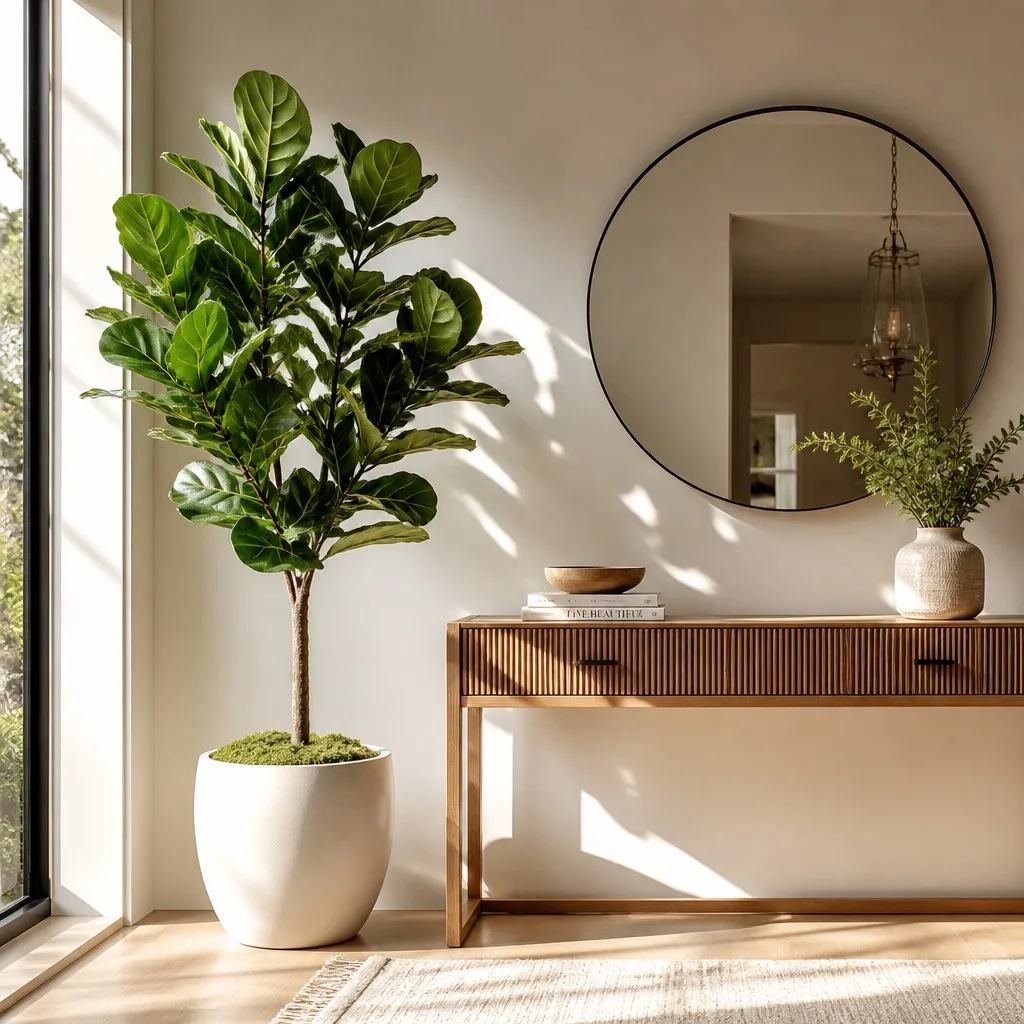
The image below is a styling example of the kind of piece this page is about; it is not evidence of a material or of how a piece performs in light.
What a bright entryway does to a plant
The front hallway is the hardest working zone in a home. It sets the tone for the interior, absorbs the thermal shifts of opening doors, and — where there are sidelights or glass-panelled entry doors — can receive a lot of direct sun. Real greenery demands consistency, and an entryway is a zone of draughts, foot traffic and uneven light, which is the practical reason artificial plants come up so often for this one room.
How quickly a real plant struggles in a glass-fronted entry depends on the species and the exposure: some scorch quickly in a hot, bright foyer, others manage in the same spot. A real plant has to match the species' own light, temperature and care requirements, so what matters is whether the entry's actual conditions suit the plant you are considering — it is not a given that an entry will kill plants repeatedly. Observe the spot rather than assuming: a position next to glass can receive several hours of direct sun and build up heat, and that is the thing to measure. If your entry is dark instead of bright, the problem reverses and the options are covered in the guide to artificial plants for low-light rooms.
Before choosing, note what the spot actually receives:
- Hours of direct sun at the point where the piece will stand, and at what time of day.
- How hot it gets next to glazing on a summer afternoon, and whether a radiator or vent is nearby.
- Whether the position is sheltered inside the door, or exposed on an open porch.
What we can say about an artificial piece is narrower than a performance claim: silk-and-polymer foliage is not a living plant, so it will not die from a missed watering while you are away. What it will not do is ignore the light it stands in.
Cost and upkeep: what the comparison can and cannot tell you
For high-traffic entryway decor, the everyday difference between real and artificial is upkeep rather than durability.
- Metric Initial cost
- Real tropical plants Plant, pot and soil
- Low-cost faux plants Lowest
- Premium artificial plants Plant only; the planter is often sold separately
- Metric Behaviour in direct sun
- Real tropical plants Many species scorch or bleach in a hot, glass-fronted foyer
- Low-cost faux plants Colour can change and plastics can become brittle with prolonged exposure
- Premium artificial plants No fade rating is published, so keep it out of all-day direct sun
- Metric Maintenance effort
- Real tropical plants Watering, pruning, pest control
- Low-cost faux plants Dusting
- Premium artificial plants Occasional dusting
- Metric Light requirement
- Real tropical plants Specific to species
- Low-cost faux plants None
- Premium artificial plants None
- Metric Ongoing cost
- Real tropical plants Soil, fertiliser, replacement plants
- Low-cost faux plants No published durability data; how long the colour holds depends on placement and handling
- Premium artificial plants No watering or feeding to pay for; a planter is often extra, and how long the piece looks right depends on placement and handling
The table is about running cost and upkeep. It is not a durability forecast, and it does not predict that one option is cheaper over a given number of years — for any artificial piece, placement is what decides how long the colour looks right.
What to check before you buy
Not all faux botanicals are made the same way, and the product page tells you more than the marketing label does. The checks that need the piece in your hands, rather than the listing, are set out in the guide to choosing a high-quality artificial plant.
1. The material line
Injection-moulded PE leaves are denser and hold a moulded shape; treated fabric leaves are lighter and often softer to the touch. Neither is automatically better, and the material line describes construction rather than performance — a denser leaf is not a promise about fading, and a fabric leaf is not a promise about anything else. Match the choice to where the piece will sit and how it will be handled.
2. Finish and colour depth
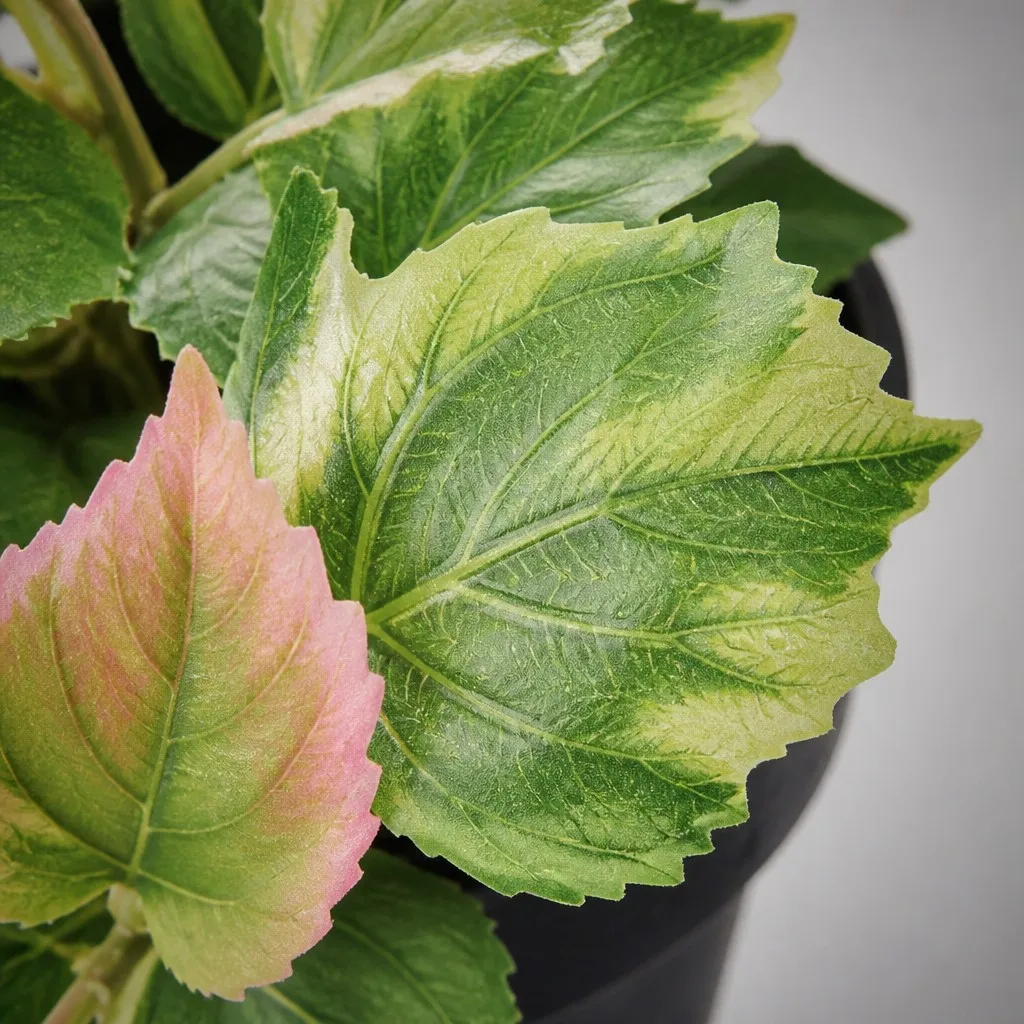
A matte finish reads more like living foliage than a glossy one, and a mix of lighter and deeper greens along the leaves avoids the single flat block of colour that gives cheap foliage away. Look at the close-up photography on the product page rather than the room shot, because that is where the finish and the colour variation are visible.
Measuring and placing a piece in a bright entry
Four measurements decide what fits and where the piece can safely stand:
- Console or shelf depth. A piece whose foliage spreads wider than the surface will overhang the front edge, which looks unstable and gets knocked.
- Door swing. Measure how far the door and any cupboard door travel. Nothing should stand or hang in that arc, whatever the surface area suggests.
- Walkway clearance. Leave the path through the entry clear. A piece that narrows the route gets caught by bags and coats.
- Height available from the floor or surface to the point where you want the foliage to stop, plus the width of the space beside it.
The measurement method, including the difference between a stem's length and the finished height once it stands in a container, is in the artificial plant size guide. If the entry is narrow and needs more than one piece, the layouts in the entryway decor ideas guide show where pieces can go; this page stays with the material, light and measurement question.
When you place the piece:
- Use the console for smaller pieces. A compact piece in a ceramic or stone container adds weight to a console and leaves the walkway clear. Check the listed dimensions and whether a container is included, because many pieces ship as stem bundles.
- Anchor a floor position with one taller piece, sized to the space you measured rather than to an assumed height, in a container heavy enough that it is not easily knocked in a doorway.
- Keep the piece out of the hottest, most direct spot where the layout allows, and keep the finish consistent across the space; high-gloss leaves catch every reflection from the glass.
- Layer textures — a woven runner, a stone tray, a brass dish — so the arrangement reads as part of the entry rather than an object placed in it.
The image below shows the kind of leaf detail worth examining on a product page; it is not evidence of a material or of how a piece performs in light.
Common questions
Do artificial plants look fake?
Mass-market plastic plants often show a glossy sheen and a single flat green. Better faux pieces use a matte finish, varied leaf colouration and printed veining, so they read as convincing from across a room and hold up better on close inspection. The way to judge is to look at one leaf rather than the wide shot.
How do I clean dust off entryway faux plants?
Entries collect dust quickly because the door opens and closes, so dust them as part of the normal routine. Check the care note on the specific listing before using anything damp and follow it, because finishes differ between pieces; for delicate multi-stemmed pieces, a soft dry brush reaches between the stems without bending them.
Can I place these plants outdoors on an uncovered porch?
These decorative pieces are intended for indoor use. For outdoor placement, follow verified manufacturer guidance, because no outdoor performance rating has been established for the pieces in this guide. A sheltered position inside the door is a different environment from an open porch with rain and direct sun.
Should I choose a specific model?
This page does not rank models, because the evidence needed to name a best piece — a sun-exposure or fade test — is not available to it. Choose on the measurements of your entry, the material line, the finish you can see in the close-up photographs, and whether a container is included.
Finishing thoughts
For a bright entryway, the useful order of decisions is: measure the door swing and the walkway first, choose the position, then choose the piece by its material line and the finish you can see. Keep the hottest, most direct spot for something you are willing to replace, and treat an uncovered position as a separate question from a bright one. If you want to see the range before deciding, the store's artificial plant collection is a starting point for browsing rather than a recommendation for one piece.